



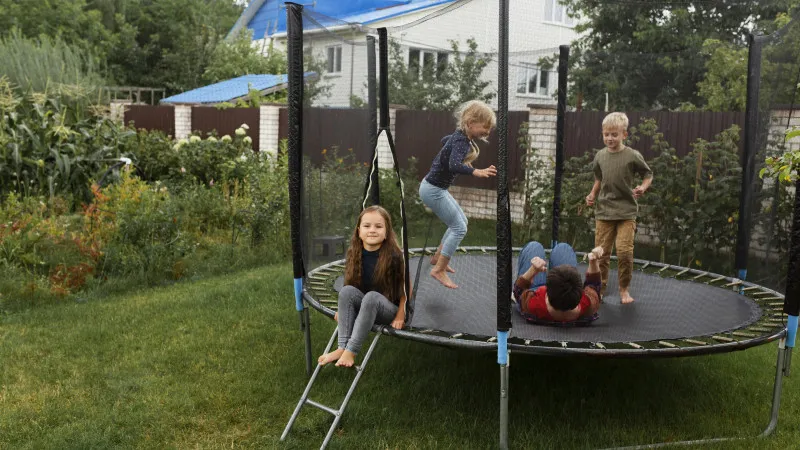
In the modern age of technology, tearing children away from screens is becoming an increasing challenge, therefore high-quality outdoor toys are essential for active childhood development. And there is nothing that provides as much joy and energy release as jumping in the yard. However, when choosing this entertainment, parents have one and the most important priority – children's safety. The market is full of various models, but not all of them meet the highest safety standards of 2026. To ensure that your investment in trampolines brings joy for a long time without causing any risk of injury, we have prepared a comprehensive guide.
Here are 5 critical things you must pay attention to before making a final decision.


1. Frame Strength and Metal Quality
The foundation of a trampoline's longevity and safety is its frame. The cheapest models are often made of thin metal, which not only deforms quickly from the load of jumps but also starts to rust after the first rain. Look for frames made of galvanized steel. Galvanizing ensures resistance to corrosion (rust), while thicker metal walls (at least 1.5 mm thick) guarantee that the trampoline will withstand intensive jumping by teenagers or even adults. A sturdy frame is essential, especially if you are looking for long-term sporting goods meant for the whole family.
2. Safety Net: Internal or External?
This is probably one of the most important details. The safety trends of 2026 unanimously state: an internal safety net is significantly safer.
-
Internal net: It is attached before the springs, right at the edge of the jumping mat. This means the child physically cannot jump onto the springs or the metal frame.
-
External net: It encloses the entire trampoline, including the springs. While this visually increases the space, there is a risk that the child could fall on the spring covers and injure their foot. We recommend always choosing modern trampolines with safety nets installed on the inside. The net must also be dense, strong, UV-resistant, and the entrance should be zipped and secured with additional clips.


3. Spring Quality and Protective Cover
A safe bounce depends on the number and length of the springs. But their protection is equally important. The spring cover (padding) must be made of thick, shock-absorbing foam (at least 15-20 mm thick) and covered with moisture and sun-resistant PVC material. If the padding is thin, it will wear out quickly, and children can painfully hit the metal. If you see that your old trampoline covers are worn out, renew them – various trampoline accessories are designed to bring an old trampoline back to life.
4. Trampoline Size and Shape: How to Adapt to the Yard?
Before buying, you must measure the area of your yard. Remember that there must be at least a 1-meter safe empty zone around the trampoline – no fences, tree branches, or building walls.
-
Round trampolines: A classic and the safest choice for beginners. Their construction naturally directs the jumper back to the center.
-
Rectangular trampolines: Mostly used by professionals and gymnasts because they provide a higher bounce and even force across the entire area. For smaller children, specially adapted, lower kids trampolines with lower bounce force and increased safety barriers are perfectly suited.


5. Additional Elements: Ground Anchors and Ladders
Trampoline safety doesn't end with jumping itself. Getting into it must also be safe. The set must include a comfortable, non-slip ladder. Moreover, due to the increasing frequency of severe storms in recent years, securing the trampoline to the ground is no longer a recommendation, but a necessity. Special ground anchors that are screwed into the earth and strapped to the trampoline frame will ensure that strong winds do not tip over or blow your property away.
By carefully evaluating these 5 points, you can be calm about your children's safety. Discover a wide range in the "Pirktukas.lt" store and gift your children an unforgettable, healthy, and active summer!


Leave a Comment